Home › News & articles › Recovery after surgery
Article · Recovery
Recovering from foot and ankle surgery
What the first weeks and months usually look like, how physiotherapy gets you walking well again, and the warning signs to look out for.
 By Mr Lucky Jeyaseelan, Consultant Foot & Ankle Surgeon · 8 minute read

Most people recover well from foot and ankle surgery, but recovery takes longer than many expect. The foot carries your whole body weight with every step, so bone and soft tissue need time to heal before they are loaded fully. Knowing what to expect makes the process much easier.
Every operation and every patient is different. This article is a general guide. Your own plan, including when you can put weight on your foot, will be explained to you before and after your surgery.
Before your operation
A little preparation makes the first few weeks far easier:
- Set up your home. Clear walkways and rugs, and move everyday things to waist height. If your bedroom is upstairs, think about sleeping downstairs for the first week or two.
- Practise with crutches or a knee scooter before the day if you can, including on stairs.
- Arrange help with shopping, school runs and pets, and lifts to your follow-up appointments.
- Plan time off work. Desk-based work is often possible from home after two weeks. Jobs that involve standing or walking usually need longer.
- Stop smoking if you smoke. Smoking slows bone and wound healing and increases the risk of complications.
The first two weeks: rest and elevation
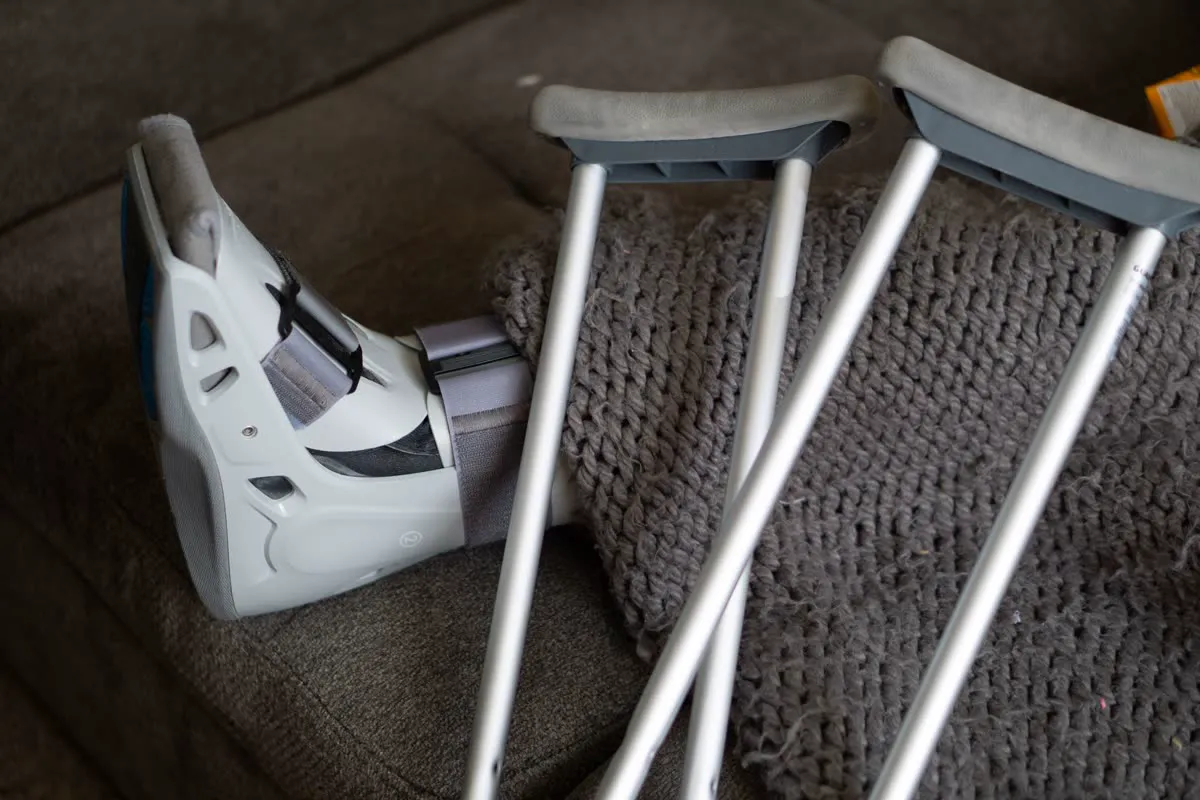
The aim of the first fortnight is to let the wound heal and keep swelling down.
- Elevate your foot above the level of your heart for most of the day, for at least 50 minutes in every hour. Lying down with your foot on pillows works better than sitting with it on a stool.
- Take pain relief regularly for the first few days rather than waiting for the pain to build. Most people find pain settles noticeably after the first three or four days.
- Keep the dressing or cast clean and dry. Use a waterproof cover to shower.
- Follow your weight-bearing instructions exactly. Some operations allow weight through the heel in a special shoe from day one. Others need no weight at all for several weeks.
- Take any blood-thinning injections or tablets you have been prescribed, and keep your toes and knee moving to help your circulation.
You will usually be seen at around two weeks for a wound check and to have stitches removed.
Weeks 2 to 6: protected walking
Once the wound has healed, most people move into a walking boot or a post-operative shoe. How much weight you can take depends on the operation. Bunion surgery often allows walking in a special shoe early on, while fracture fixation, fusions and ankle replacement usually need a period of protected weight-bearing.
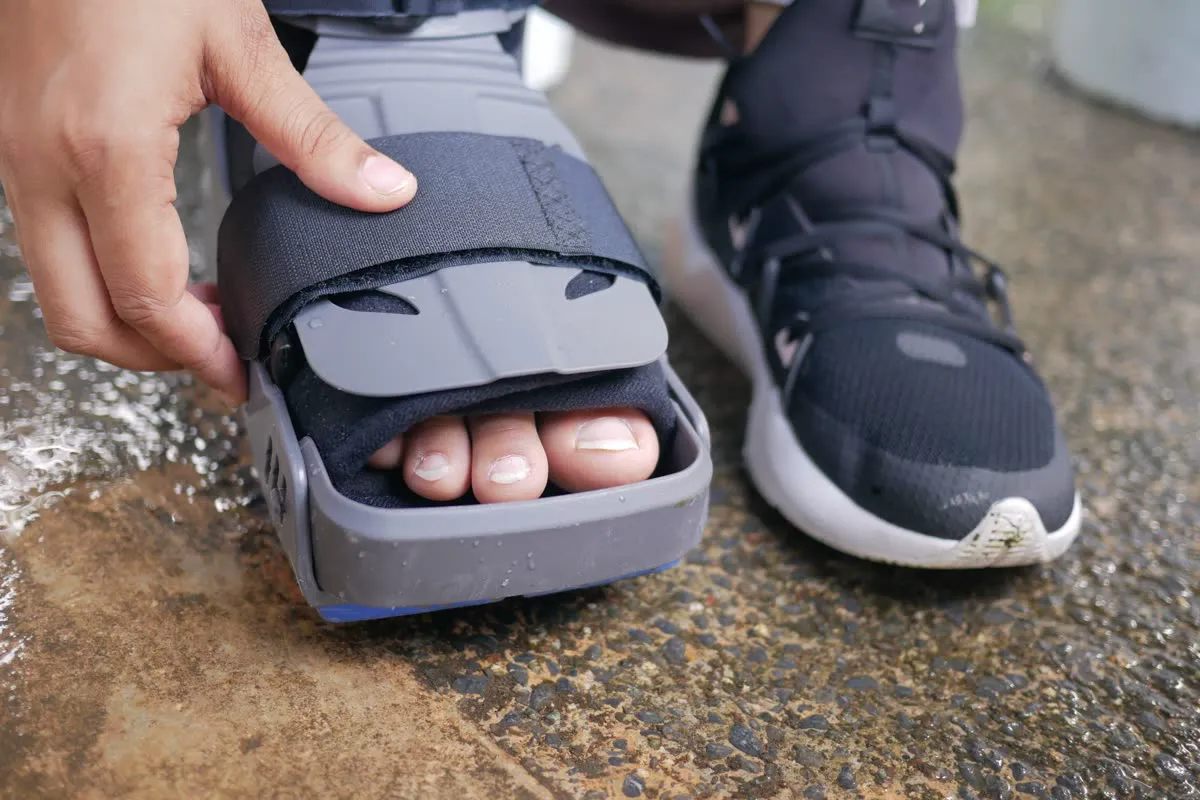
Swelling is normal at this stage and is often worse at the end of the day. Keep elevating your foot whenever you are resting.
Gentle movement of the ankle and toes may be encouraged at this stage, if your surgeon is happy, to stop the joints getting stiff. You will usually have an X-ray at around six weeks after bone surgery to check healing before you are allowed to walk normally.
Physiotherapy: getting you walking well again
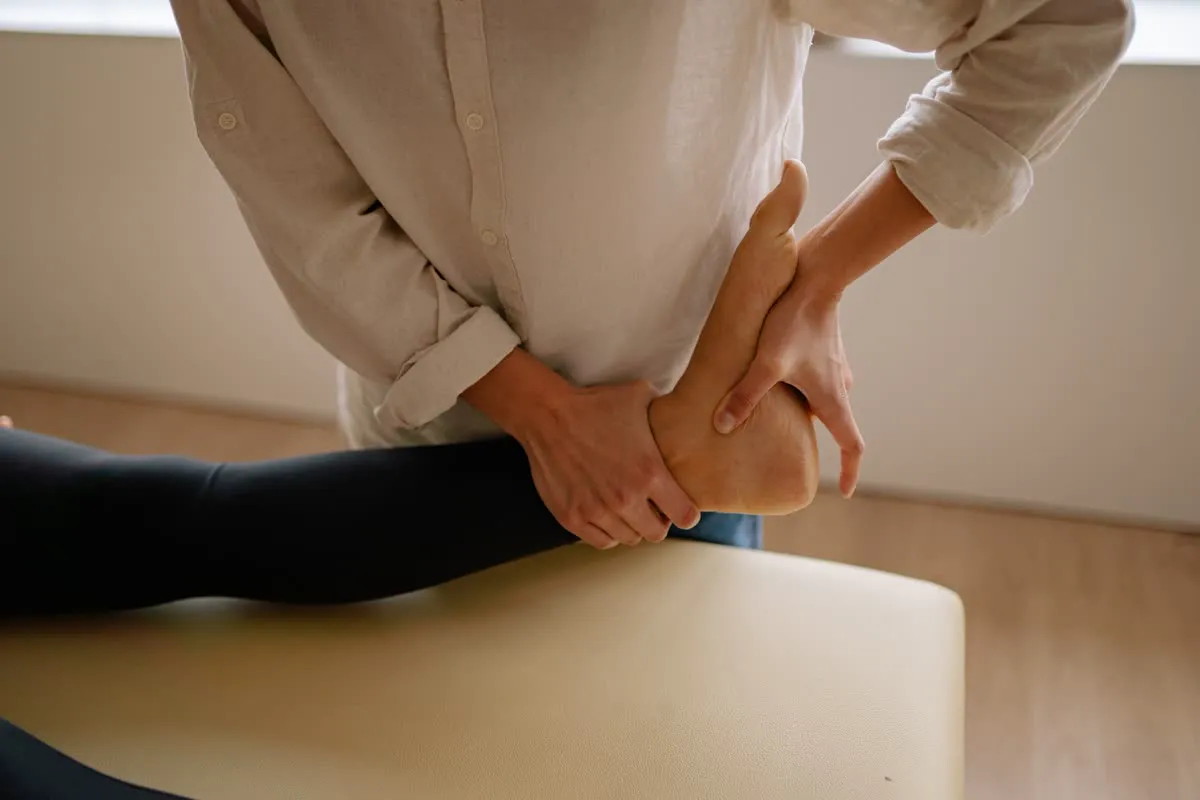
Physiotherapy is one of the most important parts of your recovery. After weeks of protection, the muscles of the calf and foot weaken, the joints stiffen and your balance is affected. A physiotherapist works through these step by step.
Your programme usually builds through four stages:
- Movement. Gentle exercises to bring back the range of motion in the ankle, foot and toes, and massage to help settle swelling and scar tissue.
- Strength. Exercises for the calf, the muscles around the ankle and the small muscles of the foot, progressing from resistance bands to heel raises.
- Balance. Standing on one leg, then on uneven surfaces. This helps prevent the ankle from giving way and reduces the risk of further injury.
- Walking and return to activity. Correcting a limp, then building up to longer walks, the gym, running or sport, depending on your goals.
Months 3 to 12: getting back to normal
Most people are walking comfortably in normal shoes by around three months after bone surgery, although this varies. Supportive trainers are often the most comfortable choice to begin with. Some patients find a rocker-sole shoe helpful while they get back to walking normally.
It is normal for the foot to swell at the end of a busy day for six months or more, and sometimes for up to a year. The final result of many operations is not reached until around twelve months. Keep up your exercises during this time, even after formal physiotherapy has finished.
A rough timeline
This table shows typical timescales after common operations. Your own recovery may be quicker or slower.
| Operation | Protected in a boot or special shoe | Driving (right foot) | Normal shoes |
|---|---|---|---|
| Bunion correction | About 6 weeks | About 6 to 8 weeks | About 6 to 10 weeks |
| Ankle fracture fixation | About 6 weeks | About 8 to 10 weeks | About 8 to 12 weeks |
| Ankle replacement | About 6 weeks | About 8 to 10 weeks | About 8 to 12 weeks |
| Ankle or foot fusion | About 8 to 12 weeks | About 10 to 12 weeks | About 12 weeks |
| Achilles repair | About 8 to 10 weeks | About 8 to 10 weeks | About 10 to 12 weeks |
You must be able to do an emergency stop safely, out of your boot, before you drive. Let your insurer know about your operation. If your left foot was operated on and you drive an automatic car, you may be able to drive sooner.
When to get help
if you have chest pain or sudden breathlessness, or if you cough up blood. These can be signs of a blood clot in the lung.
or call NHS 111 out of hours, if you have:
- pain, swelling or tenderness in the calf
- a fever, or redness, heat or discharge around the wound
- pain that is getting worse and not controlled by your painkillers
- a cast or boot that feels too tight, or toes that are numb, pale or blue
Common questions
How long will my foot stay swollen?
Some swelling is normal for six months or more after foot and ankle surgery, and it is usually worse at the end of the day. Raising your foot when you rest, keeping active within your limits and wearing a compression sock if advised all help.
When can I go back to work?
People who can work from home with their foot raised often return after about two weeks. Desk-based work in an office is usually possible from around four to six weeks. Jobs that involve a lot of standing, walking or physical work may need three months or more.
When can I fly?
Flying increases the risk of blood clots, particularly in the first weeks after surgery and when your leg is in a cast or boot. Most people are advised to avoid long-haul flights for around six weeks. Please discuss any travel plans before your operation.
Will I need physiotherapy?
Most people benefit from physiotherapy after foot and ankle surgery, especially after fracture fixation, ankle replacement, fusions, tendon and ligament surgery. Physiotherapy usually begins once the bone or soft tissue has healed enough, often at around six weeks.
When can I get back to sport?
Low-impact exercise such as swimming and cycling is usually possible from around three months. Running and sports with jumping or twisting usually take four to six months, and sometimes longer. You will be guided through this by your surgeon and physiotherapist.
This information is general and is not a substitute for a medical consultation. Your recovery plan will be tailored to you and your operation.