Home › News & articles › Plantar fasciitis
Article · Heel pain
Plantar fasciitis: why your heel hurts in the morning, and what helps
The most common cause of pain under the heel. What is going on, the exercises that help, and what the evidence says about injections, shockwave therapy and PRP.
 By Mr Lucky Jeyaseelan, Consultant Foot & Ankle Surgeon · 9 minute read
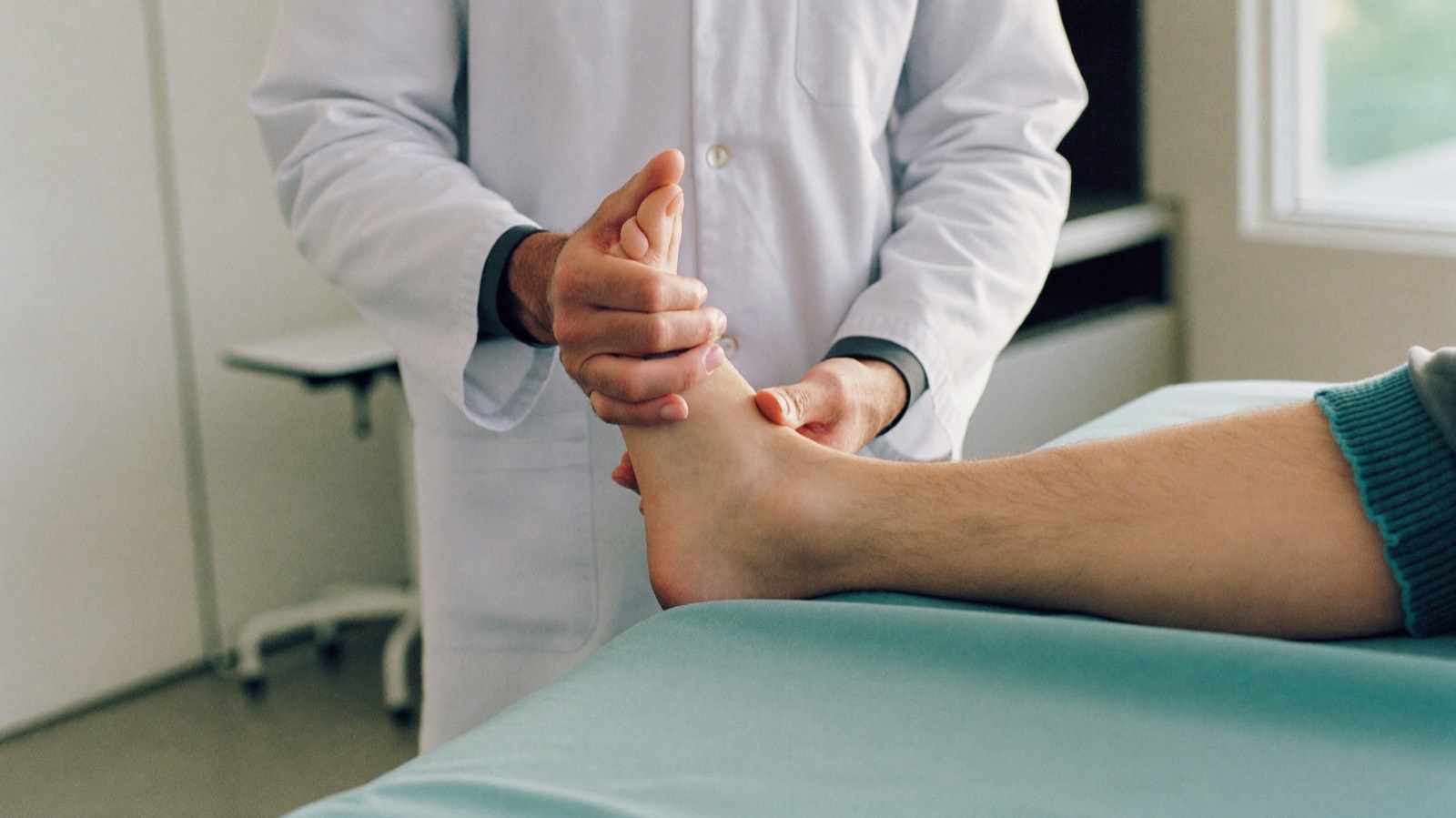
Plantar fasciitis is the most common cause of pain under the heel. Most people get better without surgery, but it can take months, and doing the right things early makes a real difference.
About 1 in 10 people will have it at some point in their life. It most often affects people between 40 and 60, but runners and people who stand all day can develop it at any age. This article is a general guide. Your own treatment will be tailored to you.
What is plantar fasciitis?
The plantar fascia is a strong, thick band of tissue that runs along the sole of your foot, from the heel bone to the base of the toes. It supports the arch and acts like a spring each time you push off.
When it is overloaded, the fascia becomes thickened and painful where it attaches to the heel bone. Although the name ends in "-itis", which suggests inflammation, it is mostly a wear-and-repair problem in the tissue. That is why rest alone rarely cures it, while gradually loading the tissue usually helps.
Typical symptoms are:
- sharp or bruised-feeling pain under the heel, often slightly towards the inner side;
- pain that is worst with the first few steps out of bed, or when you stand up after sitting;
- pain that eases after a few minutes of walking, then builds up again after a long time on your feet;
- pain that is often worse after exercise rather than during it.
Why does it happen?
There is usually no single cause. Plantar fasciitis develops when the load on the fascia is more than it can cope with. Common contributing factors are:
- A tight calf. This is the most important one. Tight calf muscles pull on the heel and increase strain on the fascia with every step.
- A sudden increase in activity, such as starting to run, a new job on your feet, or a walking holiday.
- Long periods standing, especially on hard floors.
- Body weight. Recent weight gain, including during pregnancy, increases the load on the heel.
- Footwear. Flat, worn-out or unsupportive shoes, flip-flops, and walking barefoot on hard floors.
- Foot shape. Both flat feet and high arches change how load passes through the fascia.
Is it a heel spur?
Many people are told they have a "heel spur" after an X-ray. A spur is a small ledge of bone at the front of the heel bone. Spurs are very common in people who have never had heel pain, and many people with plantar fasciitis have no spur. The spur is not what causes the pain, and it does not need to be removed.
Not all heel pain is plantar fasciitis. Other causes include heel fat pad problems, a stress fracture of the heel bone, nerve irritation, insertional Achilles pain at the back of the heel, and inflammatory arthritis. A specialist will consider these, especially if the pain is unusual or not improving.
What you can do at home
These measures work best when done together and kept up for at least 6 to 8 weeks. Improvement is usually gradual, so don't give up after a week or two.
- Stretch the calf. Stand facing a wall with the painful foot behind you, knee straight and heel on the floor. Lean forward until you feel a stretch in the calf and hold for 30 seconds. Repeat with the back knee slightly bent. Do 3 of each, 2 to 3 times a day.
- Stretch the fascia before you get up. Before getting out of bed, cross the painful foot over the other knee and pull the toes back towards your shin until you feel a stretch along the sole. Hold for 10 seconds and repeat 10 times. Do the same before standing after a long sit.
- Strengthen with slow heel raises. Stand on the painful foot on a step, with a rolled-up towel under your toes, holding on for balance. Rise up over 3 seconds, pause for 2, and lower over 3. Start with 3 sets of 12 every other day, and add weight in a rucksack as it gets easier. Some discomfort is normal, but it should settle by the next morning.
- Support and cushion the heel. Wear shoes with a cushioned heel, a slight heel rise and good arch support. Avoid going barefoot on hard floors. Off-the-shelf silicone heel cups or arch-support insoles help many people.
- Change your activity for a while. You don't need to stop moving. Cut back on what makes it worse, and swap some running or long walks for cycling or swimming. Build up again gradually.
Rolling the sole of your foot over a frozen water bottle for 10 minutes can ease pain after a long day. Simple painkillers or anti-inflammatory gels can help in the short term; check with a pharmacist that they are safe for you. If you are carrying extra weight, even a modest loss reduces the load on the heel.
How long does it take to get better?
Around 9 in 10 people improve within a year without surgery. Most notice an improvement within 6 to 12 weeks of starting the measures above, and full recovery often takes 6 to 12 months. Flare-ups along the way are common and don't mean that treatment has failed. Keep the exercises going for a few months after the pain has gone, as this lowers the chance of it coming back.
If it isn't getting better
If simple measures have not worked after two to three months, it is worth seeing a specialist. Plantar fasciitis is usually diagnosed from your symptoms and an examination. An ultrasound scan can show a thickened fascia and is useful if the diagnosis is unclear or before an injection. An X-ray or MRI scan may be used to rule out other causes.
Further options include:
| Treatment | What it involves | What to expect |
|---|---|---|
| Supervised physiotherapy | A tailored loading, calf flexibility and walking programme | Often turns around pain that hasn't improved with self-help |
| Night splint | Holds the foot and calf in a gentle stretch overnight | Can ease the morning pain |
| Shockwave therapy (ESWT) | Pulses of sound energy passed into the heel over a few sessions | A reasonable option for long-standing pain that avoids injections and surgery |
| Steroid injection | An injection into the heel, ideally guided by ultrasound | Good short-term relief that often wears off after weeks or months. Repeated injections carry a small risk of thinning the heel fat pad or rupturing the fascia |
| PRP injection | An injection made from your own blood | Promising, but the evidence is still limited (see below) |
Injections are used alongside exercises and footwear changes, not instead of them.
Platelet-rich plasma (PRP): what does the evidence say?
For PRP, a small sample of blood is taken from your arm and spun in a centrifuge to concentrate the platelets. Platelets are blood cells that release growth factors involved in healing. The concentrated plasma is then injected into the thickened part of the fascia, usually under local anaesthetic and guided by ultrasound. The heel is often sore for a few days afterwards, you may be asked to avoid anti-inflammatory painkillers for a while, and any benefit builds up over several weeks.
- Compared with a steroid injection. Several clinical trials, and reviews that pool their results, suggest PRP gives a similar improvement in pain over the first few weeks. Some studies found the benefit lasts longer, with better results at 6 to 12 months, when the effect of a steroid injection has often worn off.
- Safety. Because PRP comes from your own blood, the risk of a reaction is very low. It has not been linked to the fat pad thinning or fascia rupture that can occur with repeated steroid injections. The main side effect is pain after the injection.
- The limits of the evidence. Many studies are small, follow patients for a short time and prepare PRP in different ways, so the results are hard to compare. Few have compared PRP with a dummy (placebo) injection, so it is not yet clear how much of the benefit comes from PRP itself.
- UK guidance. NICE, which advises the NHS, has said the evidence on blood and PRP injections for plantar fasciitis is limited, and recommends they are used only with special arrangements for consent and audit. PRP is not routinely available on the NHS, and some private insurers don't cover it, so check your policy.
PRP is not a first treatment and does not replace stretching, strengthening and good footwear. It can be a reasonable option if your pain has lasted for several months despite a good exercise programme, particularly if you would like to avoid repeated steroid injections. Mr Jeyaseelan can discuss whether it is likely to help you, and how it compares with shockwave therapy and other options.
Does plantar fasciitis ever need surgery?
Only rarely. Surgery is considered for a small number of people whose pain has lasted for many months, usually 9 to 12 or more, despite a good course of the treatments above. The options are:
- Calf release (gastrocnemius recession). If a tight calf is the main driver, lengthening the tight part of the calf muscle through a small cut behind the knee reduces strain on the fascia. You can usually walk on the foot soon afterwards.
- Partial plantar fascia release. Part of the fascia is released near the heel to take the tension off it. Only part is released, because releasing too much can weaken the arch.
As with any operation, there are risks, including infection, nerve irritation and pain continuing. Mr Jeyaseelan will explain these and the chances of success so that you can make an informed choice. Read more about Achilles and calf surgery and plantar fasciitis.
When to get help
if your heel is red, hot and swollen, you feel unwell or have a fever, or you can't put weight on your foot after a fall or injury.
if:
- your pain has not improved after 2 to 3 months of the measures above
- it is stopping you from working, exercising or sleeping
- you have numbness, tingling or burning in the foot
- both heels hurt and you have pain or swelling in other joints
- you have diabetes or poor circulation in your legs
Common questions
Should I keep walking with plantar fasciitis?
Yes. Staying active is good for you and does not damage the fascia. Cut back on whatever makes the pain clearly worse, such as long walks, running or standing on hard floors, and build up again gradually as it improves.
Will plantar fasciitis go away on its own?
It often settles eventually, but this can take a year or more. Stretching, strengthening, good footwear and a short-term cut in high-impact activity usually speed up recovery.
Does my heel spur need to be removed?
No. Heel spurs are common in people without any heel pain and are not the cause of plantar fasciitis. They don't need to be removed, and treatment is the same whether you have one or not.
Can I keep running?
Many runners can keep running at a lower level if the pain stays mild and settles by the next morning. Reduce your distance and speed, avoid hills and track work, and replace some runs with cycling or swimming until it improves.
Are steroid injections a good idea?
They can give useful short-term relief, but they don't cure the problem, and repeated injections carry small risks. They work best as part of a plan that includes exercises and footwear changes.
Does PRP work for plantar fasciitis?
It may help. Studies suggest platelet-rich plasma gives similar early relief to a steroid injection, and in some studies the benefit lasts longer, without the risks of repeated steroid injections. However, the research is still limited, and NICE says it should only be used with special arrangements. It is best considered for long-standing pain that has not improved with a good exercise programme.
This information is general and is not a substitute for a medical consultation. Your diagnosis and treatment plan will be tailored to you.